
Inkjet & Digital Printing
INDUSTRIAL 3D PRINTING SERVICE DOWN UNDER PRINTS REALISTIC PROTOTYPES EARLY AND OFTEN TO IMPROVE PRODUCT DESIGNS
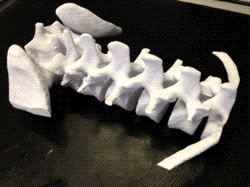
Monday 17. March 2014 - For sheet metal engineering company WH Williams of Sydney, Australia, prototyping means going beyond CAD designs and handcrafting; it means operating one of the most powerful 3D printing services on the continent. Its focus is on high-volume industrial and manufacturing clients.
Full-service 3D printing service in Australia, capable of producing any type of 3D printed prototype on the market.
Challenge: Improve industrial designs by creating prototypes early and often in the product development process.
Strategy: Anchor 3D printing fleet with the most affordable commercial 3D printer available, the Mcor IRIS.
Results: Williams 3D generously produces numerous full-colour, paper-based prototypes for prospects and clients, an effective device for marketing and customer satisfaction.
Multiple prototypes improve the design process, yielding better products for clients.
Colour pops because elf Mcor IRIS’ unique combination of ink and paper.
Mcor IRIS is “probably the best in our canon.”
Spinning off a popular business
The company has made it easy for its customers to see prototypes before final manufacture of the products they have commissioned. In fact, this service has quickly became so popular with clients that the company has spun it off as a new business. That business is Williams 3D, a comprehensive 3D printing service catering to WH Williams clients and anyone who needs 3D models.
Anchoring the Williams 3D printer fleet is the Mcor IRIS 3D printer, the world’s most colour-capable, affordable and environmentally friendly 3D printer. It’s also the only one using ordinary letter and A4 paper as the build material. Though made of paper, the finished models are essentially wood.
Wojciech Wawrzyniak, General Manager of Williams 3D said, “The Mcor IRIS has been printing nonstop since we bought it. It’s by far the most affordable machine we operate because the build material, the paper, is so ubiquitous. A model costs us three dollars to print instead of the three or four hundred it would cost on another machine. That’s why our strategy is built on using the IRIS to create first-, second- and third-draft physical prototypes. When the design is close to approval, we can, in the event it’s actually needed, produce a final prototype or the finished part on one of our more expensive machines. It would be foolish and cost-prohibitive to print in plastic from the get-go.”
Multiple prototype drafts are especially valuable for models where form and feel are important, as in the shape of a kettle handle. Clients need to grip the design in their hand before they can approve it, notes Wawrzyniak. “There’s no other way,” he says. “Multiple 3D printed prototypes on the Mcor IRIS make perfect sense for applications like these.”
Mcor IRIS’s many advantages
Acquiring an Mcor IRIS was a top priority for Wawrzyniak as he developed the new business and the 3D printer fleet. It’s one of the most versatile machines on the market, he says, with many advantages beyond its unique affordability.
For instance, its colour capabilities – the ability to print more than one million hues simultaneously – render bright and brilliant models with photorealistic surfaces. Other machines that claim similar colour power employ plaster build materials. Unfortunately, when plaster is infused with ink, the colours are muted. The powder material also can blur lines that are intended to be crisp. But because ink was designed for paper, and the two come together only in the Mcor IRIS, the colour just pops on IRIS models, explains Wawrzyniak.
High-fidelity colour is especially important in consumer goods, he notes. Imagine a coloured translucent soda bottle with a coloured label and a liquid of a different colour inside. How will this bottle look half full?
Since they’re made of paper, Mcor IRIS models are easy to mark up with a pen or pencil as they’re passed around a table, says Wawrzyniak. That’s happy news for mechanical engineers who would prefer to receive a marked-up model than have a demanding manager watching over their shoulder barking instructions while they attempt to revise a design. Reviewers can also file an Mcor model, drill it, tap it, sand it, shave it down or saw it neatly in half.
Then there’s the durability of the models. Williams 3D clients are inevitably shocked that the “paper” feels like hardwood once layered, glued, cut and printed. This dramatic transformation creates valuable intrigue around the Williams 3D brand.
The Mcor IRIS’s environmental advantage is multifaceted. Since models are paper fused by non-toxic water-based adhesive, they can be simply dropped into any recycling bin for paper. And because the machine emits no fumes and generates no dangerous heat, it’s the only 3D printer operating in Williams 3D’s office environment. The others are on the 3D printing manufacturing floor in a climate-controlled, dust-free environment.
Although 3D printers can be complex machines, the Mcor IRIS is easy to maintain. “It’s my favorite,” says Wawrzyniak, the former manager of a university 3D printing lab. “I can see and understand everything in it. The mechanics are very much like a 2D printer.”
Many companies, he notes, are still limiting themselves to virtual prototypes. “You can pass out iPads with 3D digital renderings on them, but they pale in comparison to a precise, colourful physical model that started life as sheets of paper. The fact that we’re generous with early drafts is a clear differentiator for us and delights our clients who like to get their hands on models early and often,” he says. “The Mcor IRIS is the only machine that makes this possible. Given its affordability, colour capabilities and green technology, it’s probably the best in our canon.”
Williams 3D procured the Mcor IRIS through DGS3D, the 3D printer division of Digital Graphic Supplies, an Australian company with over 30 years of experience in the print supplies industry.