
Inkjet & Digital Printing
MCOR 3D PRINTING OPENS VAST NEW POSSIBILITIES FOR PAPER-LOVING ARTIST
Tuesday 04. June 2013 - Paper is two millennia old, but the things you can do with it never stop changing.
Just ask Clare Goddard, a UK artist, designer and craftsperson who has worked with paper for decades, exploring its structure, texture, absorbency, durability and fragility. She’s also fascinated by the scope of things it can communicate when combined with shapes, lines, images and text.
Goddard is known around the world for her rustic paper kitchen utensils. They look like artifacts from a previous century and lie squarely in the realm of art. Goddard is also an avid collector, curator and manipulator of text, type, script, notes and other elements of language on paper. She’s as interested in the shapes as in the meaning.
Challenge: Time to modernise
Goddard’s world of kitchen utensils and her world of text have been converging lately, especially since she moved back to the UK after a decade in Finland. Forced to part ways with her staff of expert craftspeople, she saw the move as an opportunity to take a new direction in her work.
“From both an esthetic and productivity perspective, it was time to modernise,” says Goddard. “That’s how I came to consider 3D printing.”
Strategy: Paper-based 3D printing technology
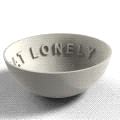
The artist is now using 3D printing to create sleeker, more finished shapes – perfectly symmetrical bowls, for example, with precisely squared-off letters cut from them. As with her handmade utensils, these works of art are made of paper.
Goddard commissions the bowls and other creations from the Royal College of Art, which uses the world’s only brand of 3D printer that makes durable physical models out of ordinary sheets of A4 and letter office paper: Mcor Technologies.
Results: Modern, yet not industrial
“The Mcor Matrix 300+ gives me a much more modern form than I could ever create with my hands alone, as well as more intricate shapes,” says Goddard. “I can then choose which textures and colours to add by hand, giving me the choice in every instance to preserve the original sleekness or make it more rustic.”
The first time Goddard saw a 3D printer it was pumping out shiny plastic models that jarred her sensibilities. She likes the more pleasing, tactile texture of paper and the connection to the forests that
produced it. “I was not interested in the plastic at all,” she says. For an artist who gained acclaim for working in used teabags, the higher-cost plastic models were too ‘”manufactured” in an industrial sense. “I want to modernise, but I don’t want to be industrial. Eco-friendly paper is the right medium for me.”
Goddard is interested in the high level of detail and precision achievable with paper, as well as its strength. By bonding sheets of paper and cutting them within 0.1 mm (0.004 inch), the Mcor Matrix creates models with wood-like durability.
Her lettered bowls recently showed at the “Forming Words” exhibition at the Flow gallery in London, which invited select artists to create new works based on samples of writing of their own choosing. One of Goddard’s pieces was a bowl with the phrase, “Can you eat lonely?” cut out. These enigmatic words came from the lips of her two-and-a-half-year-old son.
Goddard’s romance with paper was fueled by the relatively higher cost of fabric. She concentrated on textiles in graduate school but soon found it expensive to experiment with new fabrics. Paper and found objects were far more economical.
A new direction for the paper arts
Even though it’s been 15 years and she’s established her career, Goddard is still devoted to stretching her resources. She is saving all the cuttings from the 3D printing of her lettered bowls. They look like stencils, patterns or negatives of the models she has printed. She doesn’t know yet exactly what she’ll do with the cuttings, but she’ll likely make good use of them.
Goddard is deeply intrigued by this and other possibilities that Mcor’s paper-based 3D printing technology presents for artists. In addition to creating things that could never be created by hand, it gives artists new and very affordable means to collaborate with their patrons. She envisions artists making templates that customers finish by choosing from lists of text, images and patterns. For example, she imagines funeral urns that could be customised for each family and, being paper, biodegrade.
“This is just the start of something,” Goddard says. “3D printing is leading me in a whole new direction. I’m excited about the technology, a new process for paper, and the new things I can do with it. I’m going from concept to execution in a day, and ending up with something virtually impossible to create any other way. It’s humbling and exhilarating at the same time.”